Showing posts with label sexism. Show all posts

Wednesday, April 24, 2013

Conservative anti-choice motion defeated


Harper’s government is filled with anti-choice MPs, including his second in command Jason Kenney, who has opposed a woman’s right to choose since his college days. But while Harper’s majority inside Parliament is anti-choice, the majority outside Parliament remains pro-choice and recently defeated Motion 408.

This is the legacy of a mass movement. As Carolyn Egan wrote, the Ontario Coalition for Abortion Clinicsstated that for all women to have real choices in our society they require safe and effective birth control services in their own languages and their own communities, decent jobs, paid parental leave, childcare, the right to live freely and openly regardless of their sexuality, employment equity, an end to forced or coerced sterilization, and, of course, full access to free abortion. All were required if women were to have reproductive freedom… In linking struggles, OCAC was able to build a wide campaign through demonstrations, marches and rallies -- in which thousands participated. Through our organizing, we were able to broaden the participation of trade unionists, students, AIDS activists, people of colour and immigrant women’s organizations in the campaign. We understood that, without the active participation and the support of thousands, no change would occur. The goal was to build a visible, mass movement that fought together for women’s reproductive freedom. ”

Anti-choice by stealth
Because of the legacy of the movement that struck down the abortion law in 1988, Harper cannot directly recriminalize abortion, and instead resorts to anti-choice by stealth. Shortly before International Women’s Day in 2008, the Conservatives’ anti-choice “fetal homicide” Bill C-484 passed second reading, with support from the Liberals. But there was widespread opposition from women’s groups, unions and the medical community. In the fall of that year there were protests across the country, forcing Harper to withdraw the motion before the election.

Harper took his anti-choice policies abroad in 2010, using the G8 meeting to impose a maternal health plan that excluded abortion (and initially excluded contraception as well). The world’s leading medical journal The Lancet denounced the plan as “hypocritical and unjust”, and called for a “maternal health plan based on sound scientific evidence and not prejudice.” Instead, Harper went on to deny Planned Parenthood funding except in countries where abortion is illegal. As Angela Robertson said at the 25th anniversary of the Morgentaler decision this year, “Harper has responded by stating that the Conservative government will never endorse anti-abortion legislation while he is in power. We ask: if these rights are worth preserving for women in this country, are they not then equally worth supporting for other women around the world.” There was widespread opposition to Harper’s plan, causing a frustrated Conservative Senator Nancy Ruth to demand women’s groups “shut the fuck up about abortion.” Instead, women led the mass demonstration in Toronto, with a giant coat hanger and banner reading “Maternal health includes abortion.”

Then came Bill C-510 against “coerced abortion” and then Motion 312 to change the definition of “human being”, which was supposedly an issue of conscience. But as the NDP Status of Women critic Niki Ashton said in Parliament, “This is not an issue of conscience, it’s an issue of women’s rights, and women’s rights are human rights and they are not up for debate.” While Motion 312 was defeated, it received support from 10 Tory cabinet ministers including Jason Kenney and the Minister for Status of Women Rona Ambrose. Ambrose said she voted for Motion 312 as way to “raise concern about discrimination by sex-selection abortion", helping fellow Conservative Mark Warawa launch another anti-choice motion, Motion 408

Motion 408: lip service and scapegoating
Motion 408 called on Parliament to “condemn discrimination against females occurring through sex-selective pregnancy termination”. Warawa later added that he “would be shocked at anybody who would oppose a motion that is condemning discrimination against women and girls.” But as Joyce Arthur pointed out “Mark Warawa is one of the most zealous anti-choice MPs in the Conservative caucus…Further, Warawa has no record at all on protecting or advancing women’s rights.” Dr. Prabhat Jha, a world expert on sex-selection abortion, has debunked the “evidence” for this occurring in Canada warned against restricting ultrasounds and safe abortions where it does exist. According to the Society of Obstetricians and Gynecologists of Canada, “providing patients with results of diagnostic imaging procedures is part of the Canadian standard of care, and fetal sex determination and disclosure should not be exempt.”  

Motion 408 paid lip service to women’s rights while scapegoating immigrants for supposedly importing sexism. As National Post columnist Barbara Kay claimed during a recent televised debate on Motion 408: “In our country, in Canada, girls are very much as welcome as boys. There are certain communities where girls are not as welcome as boys, and that is the problem. Do I think we can judge these people? Absolutely. We are a nation that is built on certain democratic principles, on the equality of people before the law, and certainly on the equality of the sexes. So it is not only ok to judge people that take an alternate view, but to judge them quite severely, and say, ‘look, you’re here in this country, these are our values, if you are actually translating alternate values, it’s the same as if they believed in slavery.”

Motion 408 provided a cover for the Harper government’s discrimination against women—from canceling a national childcare program on his first day in office, defunding women’s groups, ignoring the women-led Idle No More movement for indigenous sovereignty, cutting refugee healthcare including for pregnant women, opposing LGBT rights, denying pay equity, and more—while aiming to further restrict abortion rights. Recently, three Tory MPs called for the RCMP to investigate late-term abortions as homicides, showing that the ultimate goal of anti-choice motions is not simply to “raise concern” but to recriminalize abortion. 

As I co-wrote last fall, “Motion 408 ignores all this systemic discrimination, erodes women's reproductive choice, scapegoates the South Asian community, and then has the audacity of accusing opponents of the motion of ‘discrimination.’ But the incessant claims of ‘not wanting to open the abortion debate,’ while chipping away at choice through deceptive motions demonstrates the Conservatives are not confident to openly confront the pro-choice majority. Challenging Motion 408 provides the opportunity to clarify the reality of abortion in Canada, expose the consequences of restricting choice, and defend and expand abortion rights through the broader context of reproductive justice.”

Reproductive justice
While the anti-choice is emboldened by the Harper majority inside Parliament, the pro-choice majority outside Parliament is rising to resist. On October 20 there was a day of action for reproductive justice across the country, and on January 28 there were events to look back on the movement that won abortion rights and look forward to continuing the movement. On March 9, thousands marched at International Women’s Day in Toronto for indigenous sovereignty, abortion rights and an end to violence against women. On March 26, UofT Med Students for Choice organized a conference about the historical, political, legal and medical aspects of abortion. On April 13, community and labour allies held a picket in Mississauga outside the office of one of the Tory MPs calling for the criminalization of late-term abortions.

Instead of uniting Tories and dividing the opposition, Motion 408 split the Tories. Rona Ambrose backtracked and refused to support the motion, explaining that “the opposition has positioned it as an issue about abortion so it becomes a very divisive issue.” Under Harper’s rule a parliamentary committee declared the motion unvotable, causing a rift in the Tories before Warawa dropped the motion.

The attacks on abortion have not gone away, either federally or provincially—from PEI which still has no abortion provider, New Brunswick which refuses to cover clinic abortions, and Ontario where Tory leader Tim Hudak has signed a petition calling for the defunding of abortion. But there’s rising resistance to defend and expand abortion rights as part of a broader movement for reproductive justice—building on the legacy of what Judy Rebick has called “the deepest and most important victory the women's movement in Canada has ever had… After eight years of organizing, demonstrating, direct action, lobbying, fundraising and sometimes facing threats and violence, we had won.” 

Thursday, October 21, 2010

Colonel Williams and violence in the military

The Canadian military is scrambling to separate itself from convicted killer Colonel Williams. This is the latest attempt to hide the reality of military training and the results it produces on soldiers and civilians--from Somalia, to Iraq, to Afghanistan.

COLONEL JEKYL, COLONEL HYDE
     The Canadian military claim to have no idea how one of their rising stars, Russel Williams, who has been in the military since 1987 and climbed the ranks to colonel, could have been guilty of stalking, sexual assaulting, confiing, torturing and killing women. But the military is sure it's not their problem. According to  Lt.-Gen. Andre Deschamps, chief of air staff:
“What could we have done differently? I’m not sure we’re going to get answers to that. There are no answers yet... This individual was a man of tremendous capacities. I still can’t reconcile the two individuals we’ve seen, the professional we knew and the criminal who is in prison now....We haven’t found one thing that needs to be changed yet...There’s nothing wrong with the uniform, there is something wrong with the individual who was in the uniform...We feel this was an aberration."
     These statements show a willful ignorance of military training and its intended results.

TRAINED TO KILL
     Canada’s General Rick Hillier famously put to bed the notion that the Canadian military is for peacekeeping when he proclaimed, “We are the Canadian Forces, and our job is to be able to kill people”. But it's a real testament to our true human nature that people are not born with this "ability". Instead it needs to be hammered into people with rigorous training, consciously aimed at desensitizing people to human suffering.
     In Michael Moore's book Will They Ever Trust Us Again (a collection of letters he's received from soldiers and their families), someone who’s brother was to be deployed to Iraq, described the process of desensitization:
“He is being trained to run over children who stand in the way of the conveys because they could be potential threats. Kids like his own, kids who may just want to get food. He’s at Fort Dix practicing, knocking over cardboard cutouts.”
Despite this intense training many people still can't bring themselves to go along with violence. Jeremy Hinzman, the first war resister to come to Canada, went AWOL after his experiences in boot camp showed him how the military turns people into killers:
“We were marching around chanting songs like, ‘Train to kill. Kill we will.,’ Or during bayonet training they’d ask, ‘What makes the grass grow?,’ and we’d say ‘Blood, blood, bright red blood.’“When we would thrust [the bayonet] the drill sergeant would yell that, and we’d have to scream back. People would actually get hoarse yelling this crap. I could never really get into that stuff. Some people ate it up because I think there is an opportunity in groups to kind of let go of your inhibitions and do wanton things... We’d sing cadences as we ran about going through villages and killing babies and stuff. It’s all presented, at least on the surface, as, ‘Oh, it’s just in humor, and no one’s around listening to it,’ but I think that really does put that mindset in a soldier that they’re killers.”
THE INDIVIDUAL OR THE UNIFORM?
     With such "training" its no wonder brutal acts like those committed by Williams have been a regular feature of US and Canadian intervention overseas, not an aberration. In 1993 Canadian soldiers savagely tortured to death a Somali teenager, Shidane Arone, and like Colonel Williams took “trophy photos”. Then too, the military "didn't find one thing that needed to be changed". They tried to cover up the killing, recently dropped charges against the killer, and promoted the commanding colonel to general.
     The same stories have emerged from Iraq. In 2004 "trophy photos" of torture and sexual violence emerged from Abu Ghraib. In 2005 US marines went house to house in Haditha killing 24 civilians including children as young as one year of age. In 2009 Obama blocked the publication of a large number of photos, including of rape and torture, of prisoners in both Iraq and Afghanistan. This year the Pentagon is scrambling to contain the information released by wikileaks, including a video of a massacre of civilians.

SEXUAL VIOLENCE WITHIN THE MILITARY
     This institutionalized violence, deliberately created and directed towards a racialized "other" to justify war and occupation, inevitably spills over onto fellow troops and civilians. Within the first year of the war in Afghanistan, military wives at Fort Bragg reported high rates of domestic abuse, including 4 killings. Last year the BBC published an article about the sexual violence female soldiers face. They reported studies by the US Department of Veteran Affairs that found 30% of military women are raped while serving, 71% are sexually assaulted, and 90% are sexually harassed. This includes Army specialist Chantelle Henneberry, who served a year in Iraq:
"I was the only female in the platoon of 50 ot 60 men. I also the youngest, 17. Because I was the only female, men would forget in front of me and say these terrible derogatory things about women all the time. I had to hear these things every day. I'd have to say 'Hey!' Then they'd look at me, all surprised, and say, 'Oh we don't mean you'. One of the guys I thought was my friend tried to rape me. Two of my sergeants wouldn't stop making passes at me... During my first few months in Iraq, my sergeant assaulted and harassed me so much I couldn't take it any more. So I decided to report him. But when I turned him in, they said, 'The one common factor in all these problems is you. Don't see this as a punishment, but we're going to have you transferred.' Then that same sergeant was promoted right away. I didn't get my promotion for six months... I was fresh meat to the hungry men there.I was less scared of the mortar rounds that came in every day than I was of the men who shared my food."
US war resister Skylar James is seeking sanctuary in Canada  because she fears for her own safety as a lesbian in the military.

THE HIDDEN TRUTH IN AFGHANISTAN
     Sexual violence within the military is not confined to the US military in Iraq. Canadian Prime Minister Stephen Harper claimed Russel Williams is "unique case. The Canadian Forces are the victim here, as are the direct victims of these terrible events." But before she became the first Canadian female soldier killed in Afghanistan, Nichola Goddard wrote a letter home about the treatment of female soldiers in her camp: "there were 6 rapes in the camp last week, so we have to work out an escort at night." Russel Williams is only unique because the military have refused to look elsewhwere. Whereas Goddard herself knew of 6 cases of sexual assault in one week, the Canadian Forces admits to only one conviction for sexual assault over the past 6 years.
     The impact that the deliberate creation and coverup of violence has on our own soldiers is a microcosm of what's inflicted on the people of Afghanistan.  Hiller justified the barbaric war in Afghanistan by claiming the soldiers were killing "detestable murderers and scumbags". Harper prorogued Parliament rather than allow public scrutiny of torture, and dismissed Williams as unique despite the experiences of troops on the ground. The words and actions of Harper and Hiller, the top of the chain of command, show that Colonel Williams is not an aberration but a product of militarism.
     Everyone opposed to what Colonel Williams was turned into should support two campaigns of the Canadian peace movement: letting US Iraq War resisters stay, and ending the war in Afghanistan.

Tuesday, October 19, 2010

Victory for breast cancer awareness as BPA declared toxic

It’s fitting that this October--Breast Cancer Awareness Month--saw Canada add Bisphenol A (BPA) to its Toxic Substances List. This victory is thanks to a long campaign by Environmental Defence, which works to expose the daily carcinogens in our lives. For too long we’ve been told to “be aware” of breast cancer, while the carcinogens we eat, drink, breathe, and lather on ourselves have been ignored. This victory is an important first step in  raising awareness about breast cancer and how to prevent it. Below I will quote extensively from the most accessible, comprehensive and yet ignored text on breast cancer prevention I’ve come across: State of the evidence: the connection between breast cancer and the environment.

BPA OFFICIALLY TOXIC
     BPA is the chemical building block of hard plastic used to make baby bottles, water bottles, and food storage containers. We are literally bathing in BPA: more than 4 billion kilograms are produced globally, and it’s been found in the bodies of more than 90 percent of people in North America. But it’s an unstable compound that can leach into food and then into people, where it acts on estrogen receptors and increases the risk of breast cancer (in addition to heart disease, diabetes, miscarriages, neurological problems, and prostate cancer). Adding BPA to Canada’s Toxic Substances List is just the first step in ending its role in breast cancer. According to Dr. Rick Smith, Executive Director of Environmental Defence, and co-author of Slow Death by Rubber Duck: How the Toxic Chemistry of Everyday Life Affects Our Health, “We look forward to now working with the federal government to take the next important step: banning BPA from all metal food and beverage cans since these can leach it into our food.”

BREAST CANCER EPIDEMIC: BIKINI MEDICINE OR THE GLOBALIZATION OF CHEMICALS?
     The designation of BPA as toxic is a challenge to the mainstream understanding of breast cancer. Health Canada exemplifies the mainstream medical model that reduces breast cancer to women and their internal hormones: while mentioning smoking, radiation, and hormone replacement therapy as risks, most risk factors they list are internal to women: female gender, older age, early menstruation, late menopause (all factors over which we have no control), having a baby late or never, never breastfeeding, and being overweight. Some have called this “bikini medicine”, reducing women’s health to those parts covered by the bikini: breasts and ovaries. This list also reads like the typical advice that  magazines bombard women with on a daily basis: be young, be thin, have children and don’t wait too long. Ironically, many of those cosmetic products designed to give a youthful appearance actually increase breast cancer risk.
     This reductionist biomedical model cannot explain the epidemic of breast cancer (or cancer in general) in which we’re living: “between 1973 and 1998, breast cancer incidence rates in the United States increased by more than 40 percent”. Conventional risk factors can’t explain this sudden rise, nor its geographical distribution:
“Globally, more than 1.15 million women were diagnosed with breast cancer in 2002. The highest rates are found in the industrialized nations of north America and western Europe…In northern Africa, as in many regions that are either developing or in transition, breast cancer rates are escalating sharply”. 
     We are witnessing the globalization of cancer, which has more to do with external  hormones than internal ones. This has been proved by the recent decline in breast cancer:
“the most recent incidence data indicate a significant decline over the past several years in both breast cancer incidence and mortality in the United States. The most widely discussed explanation for this decrease is the sharp decline in use of post-menopausal hormone replacement therapy (HRT) over the past decade and especially following the announcement in 2002 of the association of HRT use with increased risk for breast cancer.”
But obviously HRT is not the only chemical to which women are exposed:
“the increasing incidence of breast cancer [and cancer in general] over these decades paralleled the proliferation of synthetic chemicals…1000 or more new chemicals are synthesized each year. Complete toxicological screening data are available for just 7 percent of these chemicals, and more than 90 percent of these chemicals have never been tested for their effects of human health….many of these chemicals persist in the environment, accumulate in body fat, and may remain in breast tissue for decades.”
 Here are some compounds linked to breast cancer:
1) Estrogens/progestins: HRT, personal care products
2) Radiation: light at night (night-shift workers), ionizing radiation (medical radiology)
3) Xenoestrogens and other Endocrine-disrupting Compounds (EDCs): tobacco, dioxins (industrial processes), alkylphenols (detergents, hair products), parabens (cosmetic, deodorants, preservatives), BPA, phthalates(plastics, cosmetics, cleaning materials), suncreens, pesticides, food additives, hormones used in food production
4) Non-EDC Industrial chemicals: ethylene oxide (cosmetics), organic solvents, aromatic amines (tobacco, combustion), benzene (exhaust, refineries), butadiene (petroleum refineries)

     Besides the fact that tobacco is but one of multiple carcinogens, three themes emerge from this list: toxic consumption, occupational hazards, and home cleaning products.

TOXIC CONSUMPTION
     The cosmetic industry bombards women with constant messages that they need to slather all sorts of chemicals on their bodies, and it turns out many of these are linked to breast cancer. How ironic then that Estee Lauder has tried to silence this message by shining pink lights on various landmarks as part of breast cancer awareness month (see my previous post on this issue). There is also a racialized aspect to carcinogenic cosmetics, as magazines and adds perpetuate the message that black is not beautiful (like L'Oreal's ads that white-washed Beyonce):
“Products marketed to women of colour often contain some of the most problematic chemicals. Skin lighteners, hair relaxers, hair dyes and skin moisturizers developed for women of colour often contain carcinogens and endocrine-disrupting compounds”
    The food industry is also producing breast cancer by their profit-driven quest to produce the largest animals in the most cramped conditions in the shortest time span, along with homogenous crops that require artificial protection from pests:
“Pesticides sprayed on crops, antibiotics used on poultry, and hormones injected into cattle, sheep and hogs expose consumers involuntarily to contaminants that become part of our bodies. Research suggests that some of these exposures may increase breast cancer risk”. 
     While cancer, and illnesses in general, are often reduced to “lifestyle choices”, there is often very little choice involved as most people are unaware of what they are consuming:
“despite opposition from physicians, scientists and consumer advocacy groups, the FDA in 1993 approved Monsanto’s genetically engineered hormone product rBGH for injection in daily cows to increase milk production. This hormone quickly found its way (without labeling) into the US milk supply [where is raises IGF-1, which is linked to breast cancer] and from there into ice cream, buttermilk, cheese, yogurt and other dairy products.”
     But in another recent victory, a US federal court ruled Ohio's ban on labeling of dairy products as hormone-free was unconstitutional.

WOMEN AND WORK
     Women are not just breasts and ovaries, are not just consumers, they are also workers. Ignoring this fact has prevented scientific studies from discovering risk factors for breast cancer:
“The relationship between toxic exposures in the workplace and later diagnosis of breast cancer has been difficult to establish in large part because, until recently, occupational studies have not included women in sufficient numbers to evaluate relationships between environments and female-specific cancers like breast cancer.”
     Now research is emerging that links breast cancer with work done predominantly by women. I know from my work that most nurses and radiology technicians who work night shifts are women. Add to this list cosmetic industry workers, dental hygienists, and many agricultural workers. There is also a racialized aspect to these exposures:
“Many farmworkers are undocumented immigrants who enjoy fewer legal protections and less access to health care that the general population, limiting their ability to protect themselves from pesticide exposure or to seek medical care in response to chemically induced health problems.”
     In addition, many dangerous industries are located in close proximity to racialized communities, like Canada’s tar sands and its carcinogenic impact on FirstNations. Finally, women’s labour in the home has been ignored not only economically but also medically:
“although women make up nearly half the workforce in the United States, relatively few studies have been conducted to identify occupational exposures associated with breast cancer…Many women actually have two places of work: their homes and the paid workplace. Each site has its unique set of exposures to chemicals and non-ionizing radiation. However, traditional occupational exposure studies focus on exposures only in the paid workplace.”
     To truly raise breast cancer awareness we need to ditch bikini medicine and acknowledge the reality of women’s lives: pressured by sexist and racist media to douse chemicals on their bodies, consuming food laced with hormones and pesticides, working in toxic environments in the workplace and in the home, living in communities surrounded by dangerous oil industries. Only by exposing and purging all these chemicals from our lives will we have a chance to conquer breast cancer. Declaring BPA toxic marks an important first step.

Friday, October 15, 2010

"Female viagra" and the medicalization of women

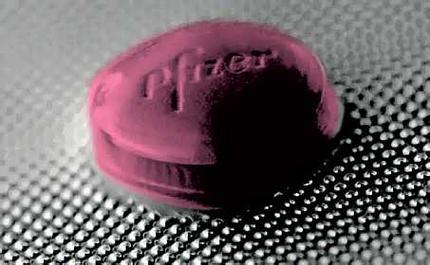
The pharmaceutical giant Boehringer Ingelheim has dropped its plan to market its failed antidepressant as a “female viagra” pill. The US Food and Drug Administration slammed the drug studies for failing to produce benefits, while 15% of women dropped out of the study due to side effects like depression, fainting and fatigue. “Female sexual dysfunction” is the latest pharmaceutical attempt to pathologize women, while real healthcare needs go unmet.


"FEMALE VIAGRA"
     According to a recent Globe&Mail article:
“Female sexual dysfunction” – a much-debated term that includes lack of desire and inability to reach orgasm – was entrenched when a 1999 article in the Journal of the American Medical Association announced that 43 per cent of women suffer from some form of sexual dysfunction. Problematically, the lead author was revealed to have financial ties to Pfizer.” 
Marketing this drug as a “female Viagra” is also problematic: Viagra is to achieve a physical erection, while these pills for women are trying to alter their brain chemistry to promote desire they are told is insufficient.  This does not mean taking a nihilistic attitude towards medicine but to acknowledge the impact of profit-driven pharmaceutical companies (for more on this check out the documentary Orgasm Inc.). As Ray Moynihan, co-author of Sex, Lies and Pharmaceuticals: How Drug Companies Plan to Profit from Female Sexual Dysfunction explained in the article above:
“There would be a cohort of women with nerve damage after surgery, or sexual side effects of SSRIs, for which a health professional could be extremely helpful. But to categorize the changes in desire that happen as we move through our lives and relationships as symptoms of a disorder or a dysfunction is highly controversial and questionable. I’m not sure that women going through absolutely normal changes in desire want to identify themselves as suffering from some medical disorder.”
WEAPONS OF MASS PRESCRIPTION
     Like all industries, the pharmaceutical industry is made up of rival firms in competition for market share. In the field of health this produces an inevitable pressure to pathologize. Men now face the prospect of getting treated for “andropause” (age-related decline in testosterone), “obesity” has gone from a risk factor to its own disease requiring pharmaceutical intervention (more on this in a future post), while the notion of “pre-hypertension” is pushing blood pressure medicine on people with normal blood pressure.
     Women have faced a long history of diseases created to pathologize and control their bodies. For centuries women were diagnosed as suffering from “hysteria”—a catch-all term uniquely imposed on women, based on the idea that their uterus (“hyster” in latin) was out of control. As one blogger has summarized:
“The symptoms of hysteria ranged from the erotic to the ludicrous and included fainting, insomnia, fluid retention, vaginal lubrication, ‘voluptuous sensations,’ and, natch, ‘a tendency to cause trouble.’ Sometimes disorders such as epilepsy, anorexia, postpartum depression, and menopause would be misdiagnosed as hysteria, but mostly ‘hysterics’ were just women with a libido and a disapproving patriarch in their lives.” 
“Treatment” varied from incarceration in asylums (more on the history of psychiatry in a later post), surgical removal of the clitoris, or forced orgasm.
     In the 20th century the medical establishment dropped “hysteria”, but  went on to universally medicate older women with Hormone Replacement Therapy (HRT) on the grounds that menopause was a disorder. Pressure from women’s groups helped expose the bad science behind this, culminating in the Women’s Health Initiative showing that indiscriminate use of HRT can lead to breast cancer, heart disease, strokes, and pulmonary emboli.
     Then along came “Pre-Menstrual Dysphoric disorder”. When the patent for the anti-depressant Prozac was about to expire, Eli Lilly got a new patent for it, under a different name, for the treatment of this new “disorder”. According to feminist psychoogist Paul Caplan, "It's a label that can be used by a sexist society that wants to believe that many women go crazy once a month...Any normal hormonal change in people of either sex can exacerbate migraines, thyroid problems, etc., but no one suggests calling men's hormonal changes kinds of mental illness".  Now, with "female seual dysfunction", BigPharma has pathologized women’s sexual lives in order to further push their products.

WOMEN’S HEALTH
     This does not mean dismissing the role of medicine in women’s health, but basing it on women’s needs not pharmaceutical profits. Ironically, the creation of false medical needs runs in parallel with the denial of real needs such as abortion or HIV prevention.

     An alliance between the women’s movement and the progressive medical community struck down laws against abortion, and continues to fight for access--from promoting more teaching about abortion in med schools, to challenging Canada's minority government that wants to deny abortion rights to the 70,000 women around the world who die from unsafe abortion every year. The women's movement was at the forefront of the G20 protests, exposing Harper's war on choice and leading the 40,000 strong march with a giant coat-hanger.
     Women also continue to fight for recognition and prevention of HIV. When AIDS was first discovered it was blamed on gays and Haitians and the impact on women was ignored, resulting in many women being excluded from receiving medicine, services, and disability benefits. Women demonstrated with the slogan “women don’t get AIDS, they only die from it,” demanding the definition include conditions specific to women (like invasive cervical cancer). This succeeded in 1993 and uncovered the true statistics, as the number of women with the diagnosis of AIDS tripled. But HIV continues to be blamed on gay men and promiscuity, for which the main prevention is condoms. In 1991 a group of women working on AIDS prevention in Haiti published a text countering myths about women and AIDS, a list that needs repeating almost 20 years later:
-“AIDS is a disease of men”: the data are overwhelming: AIDS was never a disease of men. Given transmission dynamics, AIDS may in fact becoe a disease predominantly afflicting women
-“Heterosexual AIDS won’t happen": Heterosexual AIDS has already happened. Indeed, in many parts of the world, AIDS is the leading cause of death among young women.
-“women’s promiscuity causes AIDS” : most women with AIDS do not have multiple sexual partners, they have never used IV drugs, they have not received tainted blood transfusions. Their major ‘risk factor’ is being poor. For others, the risk is being married and unable to control not only their husbands but also what jobs their husbands have to perform to make a living.
-“women are AIDS vectors”: ‘women are too often perceived as agents of transmission who infect men and ‘innocent babies’. Prostitutes have been particularly hard hit by such propaganda, but prostitutes are far more vulnerable to infection that to infecting; AIDS is an ‘occupational risk’ of commercial sex work, especially in setting in which sex workers cannot safely demand their clients use condoms.’
- “condoms are panacea”: gender inequality calls into question the utility of condoms in setting in which women’s ability to insist on ‘safe sex’ is undermined by a host of less easily confronted forces. Furthermore, many HIV-positive women choose to conceive children, which means that barrier methods that prevent conception are not the answer for many. Woman-controlled viricidal preventive strategies are necessary, if women’s wishes are to be respected.
To overcome the disconnect between multibillion dollar companies medicating women for manufactured diseases while millions of women are denied basic healthcare needs, healthcare needs to base itself on the needs of people not profit. Our bodies, our choice.

Sunday, October 10, 2010

Whose "risky behaviour" is really spreading syphilis?

The US administration has apologized for intentionally infecting Guatemalans with syphilis. That’s right, from 1946 to 1948 American scientists intentionally infected 700 people in Guatemala—prisoners, soldiers, and psychiatric patients—with the infectious disease syphilis, in order to study the impact of penicillin. These days syphilis is blamed on people's "risky sexual behaviour"--especially men who have sex with men--so this story is an opportunity to review the history of syphilis scapegoats (and for links to other US human experiments, check out the recent entry from this wonderful blog).

SEXISM, RACISM
     In 1918, rather than divert military spending to jobs and healthcare, US President Wilson funded the creation of detention centres, some surrounded by barbed wire and guards, for the forced quarantine of tens of thousands of women convicted of prostitution. As one government official explained (and if you want to read an excellent history of this read this source of this link, Alan Brandt's No Magic Bullet: a social history of venereal disease in the United States):
“The prevention of society against moral and social murder committed by the prostitute are functions in part of the detention house and reformatory. These functions are inextricable related to the control of the dissemination of gonorrhea and syphilis through promiscuous prostitution.”
     African-Americans were also accused of spreading syphilis through promiscuity. Whereas the prison system treated poor women like criminals, the medical system treated poor blacks like guinea pigs. From 1932 to 1972, the Tuskegee syphilis experiment deliberately gave fake medicine to 400 poor black men in Alabama who had syphilis, in order to study the long term and lethal health effects of the untreated disease—which destroys the cardiac and nervous systems. Then men were told they were getting free healthcare for their “bad blood”, and were promised free money for burials if they consented to autopsy after dying.

HOMOPHOBIA
     The scapegoat for syphilis has shifted from women, to people of colour, and now to gay men. In 2003, Vancouver’s poorest neighbourhood was struck by one of the world’s largest outbreaks of syphilis. But instead of blaming poverty and healthcare cutbacks, the response was to blame gay men. A spokesperson for the BC Centre for Disease Control claimed that “we know it spreads very quickly in the gay community. Almost every other outbreak in the world is confined to that community”. Health Canada has issued similar homophobic and medically false statements, claiming that
“risky sexual behaviour among MSM (men who have sex with men) and other populations is a risking global trend. One reflection of this is the numerous outbreaks of infectious syphilis seen worldwide. In 1995, the World Health Organization (WHO) estimated that there were 12.2 million new cases of syphilis”.
     Mainstream medicine continues to view gay sex as inherently dangerous, leading to bans on blood donations from men who have sex with men (see my post on this issue), and ridiculous statements that syphilis is only spread by gay men. The actual WHO stats show that of 12.2 million new cases, 11 million are in the global south, and a majority are women. By blaming gay men of spreading syphilis, these statements ignore conditions of poverty and inequality that put both men and women at risk of syphilis. All the homophobic hysteria about “risky sexual behaviour” is redefining a broad public health concern as a behavioural problem of a minority group. Blaming syphilis on “risky sexual behaviour” is like blaming cholera on risky drinking behaviour or blaming tuberculosis on “risky breathing behaviour” and asking people to reduce their number of conversation partners. Living in poverty and not having access to healthcare or clean water isn’t an individual behaviour, it’s collective condition imposed on millions of people.

GLOBAL TUSKEGEE EXPERIMENT
     Millions die every year of infectious disease, not because of their individual behaviour but because they are kept in poverty and denied lifesaving medicine. Tuberculosis infects a third of humanity and remains a leading infectious causes of death 50 years after the discovery of curative treatment. Treatment also exists for malaria but lack of access to it is leading to widespread deaths. And HIV now infects 40 million people and is causing a reversal of life expectancy in countries where anti-retrovirals are not available. As a result we have a global Tuskegee experiment (for a great book on this topic, read this source, Paul Farmer's Infections and Inequalities), as six million people die every year from these three epidemics not because medicine doesn’t exist but because it is denied.
     The same governments that have given billions of dollars to banks, corporations, and the military have just intentionally underfunded the Global Fund for HIV, TB, and malaria. As Medecins Sans Frontieres announced last week, “Major donor countries have chosen to undercut the main international funding mechanism to save the lives of millions of people at risk of dying from AIDS, TB, and malaria.” The Global Fund required $20 billion to expand programmes, including $13 billion just to maintain the program, but have received only $11.7 billion. Canadian Prime Minister Stephen Harper recently promised $18 billion for fighter jets, which could cover the $8 billion Global Fund shortfall twice over, or which could almost cover the entire Global Fund needs. But as MSF’s Dr. Jennifer Cohn declared, “world leaders have officially under-financed the Global Fund. This decision will result in the death of millions of people from otherwise treatable diseases.”
     This is the true risky behaviour that threatens public health, not diverse and healthy sexual expression but the deliberate maintenance of conditions that spread infections coupled with the deliberate denial of medicine to treat them.